
Packing, Tech, Money & Daily Essentials
Heading to Oxford for a language course or study programme? A little preparation goes a long way. This guide covers the essentials – what to pack, how to stay connected, how to handle money, and how to settle into daily life – so your first two weeks are smooth and stress-free.
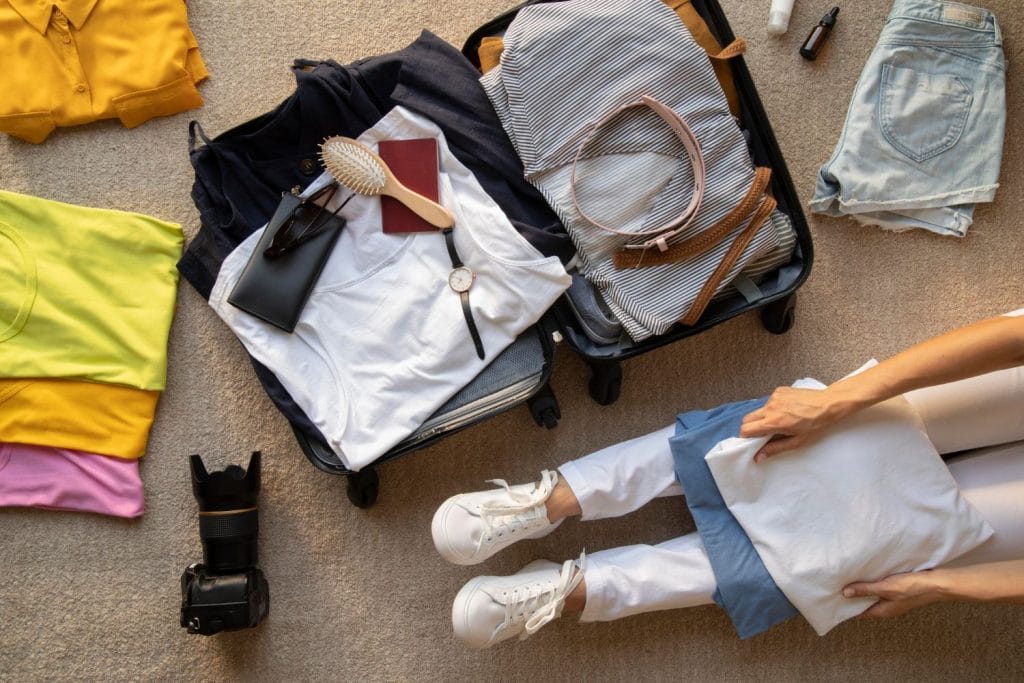
Pack Smart
Oxford has everything you need, so don’t try to bring your entire life. Pack the essentials and buy the rest when you arrive.
Documents
- Passport (with visa if needed), admission letters, photo ID and medical records – keep originals in your carry-on and save digital copies to your phone or cloud storage
- ETA (electronic travel authorisation) to apply online by 3 working days before arriving in UK
- A list of emergency contacts and your school’s address
Clothing
- Layers are key – Oxford weather is changeable, often cool and damp
- A waterproof jacket with a hood is more practical than an umbrella
- Comfortable, waterproof shoes for cobbled streets
- One smart-casual outfit for college dinners or events
Health
- Enough prescription medication for your full stay, plus a copy of the prescription
- A small first-aid kit: pain relievers, plasters, any personal care essentials
- Spare glasses or contact lenses if you use them
Electronics
- Phone, laptop/tablet and all chargers
- A UK three-pin plug adapter – this is essential. Most modern chargers are dual-voltage, so you just need the adapter, not a converter
- A power bank for long days exploring the city
What to skip
Large toiletries, bulky towels, heavy textbooks – all cheaply available in Oxford. Bring travel-size basics for day one and do a shop once you’ve settled in. If you’re in a homestay, bedding and towels are provided.
Get Connected
A working phone with local data is one of the first things you’ll need.
- Make sure your phone is unlocked before you travel
- Pick up a UK pay-as-you-go SIM on arrival (EE, Three, Giffgaff and others are available at the airport or city-centre shops). A month of data and calls typically costs £10–£20. Alternatively, order an eSIM online before you fly so you have data the moment you land
- Download essentials before you leave home: Google Maps, WhatsApp (widely used in the UK for group chats), a weather app, and your school’s app if they have one
- Your school and homestay will have Wi-Fi – but a local SIM gives you a backup while you’re getting set up
Money Matters
- Arrive with £50–£100 in cash for immediate expenses like transport from the station. After that, card payments work almost everywhere
- Contactless is king – you can tap a card or phone for purchases up to £100, including buses and cafés
- Tell your bank you’re travelling. If your card charges foreign-transaction fees, consider a travel card like Wise, Revolut or Monzo for better rates
- Use bank ATMs (free) rather than standalone cash machines in shops (often charge a fee)
- Decline the ATM’s offer to convert currency for you – let your own bank handle it
Budget tip: If you’re in a homestay, breakfast and dinner are usually included on weekdays and all meals at weekends, so you mainly need to budget for lunches and snacks – around £10–£15 a day if you’re thrifty. Supermarkets like Tesco, Sainsbury’s and Aldi are all nearby.
Settling into Daily Life
Homestay tips
Living with a host family is one of the best ways to improve your English and understand British culture. Don’t be shy – ask questions, offer to help around the house, and join in at mealtimes. A small gift from your home country (local sweets, a souvenir) is a kind icebreaker but absolutely not expected.
Getting around
- Oxford is very walkable and bike-friendly. Buses are frequent and accept contactless payment
- Important: Cars drive on the left. Always look both ways – some quiet lanes have faster traffic than you’d expect
- For trips to London or the airports, the Oxford Tube and Airline coaches run around the clock
Cultural notes
- Punctuality matters – aim to arrive a few minutes early
- Queuing is taken seriously. Always join the back of the line
- “Cheers” means “thanks” as often as it means “cheers”. “Sorry” is used constantly and rarely means an actual apology
- People are patient with accents. If you don’t understand something, just ask – “Pardon, could you say that again?” works perfectly
Staying safe
- Oxford is a safe city, but keep valuables out of sight in busy areas
- Emergency: 999. Non-urgent medical help: 111. Non-urgent police: 101
- Tap water is safe to drink – bring a reusable bottle
Make the Most of It
The first two weeks go fast. Sign up for social events your school organises – city tours, group outings, game nights. Say yes to things. Oxford is full of free museums, beautiful parks, diverse food, and thousands of other international students in exactly the same position as you.
CIE Oxford’s classes have a maximum of eight students, so you’ll get to know your classmates quickly and have plenty of opportunity to practise. The campus is right in the city centre, opposite the Oxford Union – step outside and you’re in the middle of it all.
If you feel overwhelmed, that’s normal. Talk to your host family, a teacher, or a classmate. Everyone around you has helped new students before and knows exactly what you’re going through. Within a week or two, you’ll have a favourite café, a group of friends from different countries, and a routine that makes Oxford feel like home.
Double-check your passport and adapter, pack an open mind, and get excited – Oxford is ready for you.